


For AC repairs or maintenance, call Fast Air Repair at 352-290-7968 today!
One of the most common questions we get is whether it’s a good idea to cover your air conditioning unit when you’re not using it. Most homeowners want to protect their investment and assume that adding a cover will increase the lifespan of their AC system as it protects the unit from cold, rain, and extreme weather.
However, the answer to “Should I cover my AC unit in the winter?” is more complicated than a simple yes or no. As one of the best-known air conditioning experts in Inverness, we believe in helping owners decide whether covering the AC unit in winter months is the right option for them. Read on to find out when to cover your air conditioner and when it’s best to leave it alone.
Reasons to Not Cover Your AC Unit in Winter
For many homeowners, installing a cover during winter isn’t necessary and may even harm your AC unit. If you’re still unconvinced, here are some of the top reasons to avoid installing a cover during winter.
It Already Has a Protective Cover
Manufacturers understand that AC units must stand outside year-round and build them to resist the elements. Modern air conditioners have a protective layer that resists wind, snow, rain, and extreme heat. Unless you live in a place with extreme weather conditions, the pre-installed metal covering is sufficient to protect your AC unit, regardless of the weather.
Covers Increase Humidity
An AC unit generates moisture as it works, but designers alleviate this problem with an airflow system that redirects moisture away from the unit. You may think that adding a cover will protect the unit from rain and moisture, but it traps the moisture generated by the unit and the environment.
Trapped moisture leads to many problems, including mold growth, rust, and a poorly functioning AC. If you leave the cover on for several months, you may return to a completely broken AC unit that requires replacement parts and mold treatment, just in time for summer break.
Incorrectly Installed Covers Attract Animals
Covering your AC unit creates an appealing nest for many creatures, including insects and rodents. This is especially true in winter, when a cover traps heat and moisture while protecting the area from rain and snow, making it the ideal spot for rats, mice, and squirrels to make their nests.
These animals are usually quite disruptive and may even start chewing through ductwork and using your AC unit to enter your home.
Reasons to Cover Your Air Conditioning Unit
While we don’t recommend AC unit covers for most of our clients, there are times when the answer to “Should I cover my AC unit in the winter?” is yes. Here are some of the most common reasons we recommend covering your unit in the fall and winter.
Tree Proximity and Protection from Icicles
You may need to consider an AC cover if your unit sits under several trees. Tree debris, such as leaves, twigs, flowers, and berries, may get into your unit, causing clogs and putting additional stress on your system. If you have many trees around the unit, consider covering your AC during spring and fall and conducting an annual spring service to remove any clogs before using your AC in the summer.
Another reason to cover your AC in the winter is if you experience icicle formation above or near the unit. While the best solution is to remove icicles before they fall, having a cover adds an extra layer of protection to keep your unit safe.
Harsh Winter Weather
Some areas get a lot of sleet and snow during winter, which leads to freeze-and-thaw cycles that can negatively affect your unit. The main problem with constant freeze-and-thaw cycles is that they result in rapid expansion and contraction of water, which puts pressure on structural AC unit parts.
Covering your unit should keep temperatures inside more stable, protecting it from the damaging effects of expanding water in the ductwork and the unit itself.
How to Properly Cover Your Outdoor Air Conditioning Unit
Full-sized air conditioner covers may look sleek and pretty, but they can do more harm than good. They prevent airflow to the unit, leading to problems such as condensation, increased humidity, and animal nesting.
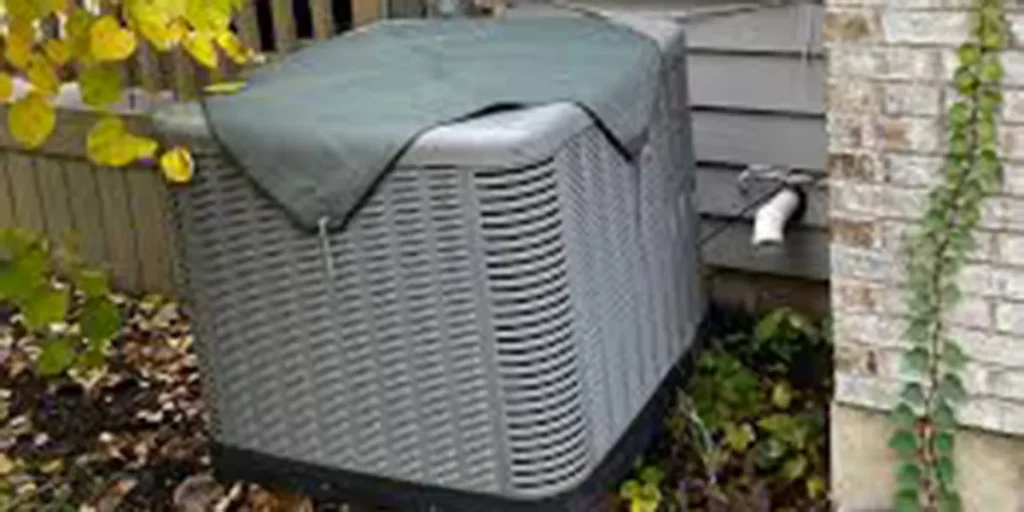
A better option is to buy a top-only cover. This cover protects the unit against falling debris while allowing airflow to keep the unit dry and moisture-free. You can make your own cover using a piece of plywood that doesn’t extend past six inches from the top of the AC unit, or you can buy one online.
Note that these top-only covers will only protect your AC from falling debris and are ineffective at controlling potential freeze or thaw concerns. If you live in an area with harsh winter weather, consider investing in an AC unit that can handle it. Many manufacturers make rugged, weatherproof versions of their units that are better at coping with extreme weather conditions.
Our experts can advise you on the best cover for your particular AC unit model and your unique situation.
No matter what cover you choose, remember to remove it before you start using your AC system. All covers interfere with your unit’s performance and can lead to increased wear and tear.
We also recommend a full inspection and maintenance in the spring to ensure your unit is functioning optimally. These inspections can detect and repair any minor problems before they become serious concerns.
Get the Best AC Services in Town
Whether you need answers to questions like “Should I cover my AC unit in the winter?” or want to book an air conditioning repair, our Fast Air Repair team is standing by to help.
Call 352-290-7968 to schedule a quote for your next air conditioner service and discover why we’re the best AC technicians in the area!