


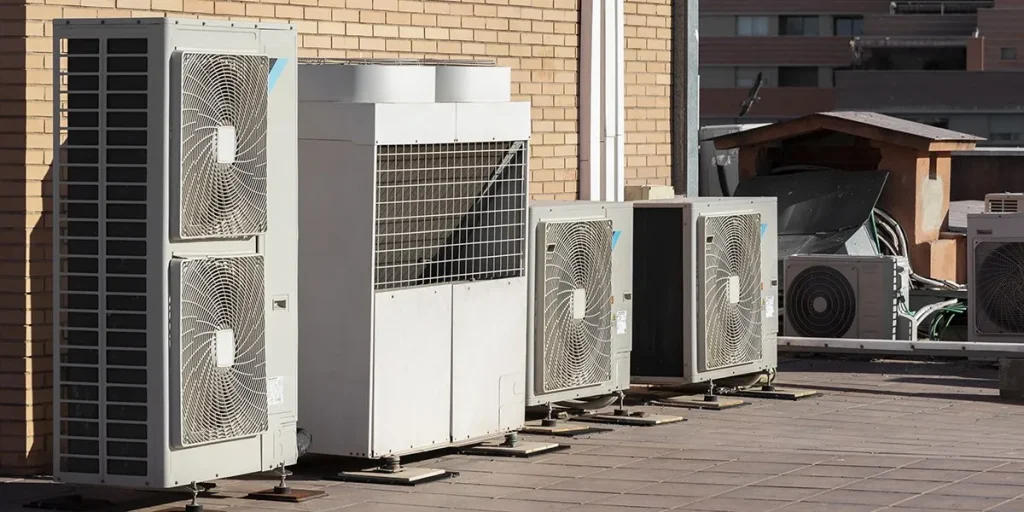
Climate change affects us all, and we each need to do our part to reduce our carbon footprint to leave a livable planet for our offspring. Recycling, reducing fuel consumption, and energy conservation are just some of the many ways we can slow and potentially reverse the process of global warming. Many earth-conscious citizens use their computers less during the day, conserving water by running their dishwashers less frequently, and purchasing more energy-efficient HVAC systems.
The United States federal government offers HVAC tax credits to citizens willing to update their systems and reduce household energy use. Modern HVAC systems use significantly less electricity than previously manufactured air conditioners. This blog will review all the information necessary to benefit from this tax incentive.
Call Fast Air Repair today for a reliable and experienced HVAC contractor in Ocala, FL, who can update your HVAC system to maximize energy efficiency.
What Are the Energy-efficient HVAC Tax Credits?
The government is offering tax credits for citizens who invest in energy efficiency. People who upgrade appliances and invest in renewable energy sources can reduce their federal taxes. One piece of equipment that qualifies for this tax break is the HVAC system.
Because HVAC systems aren’t cheap, many people procrastinate about replacing them, even when their systems malfunction. In this situation, people often have an underperforming HVAC system in terms of energy efficiency. Excess energy use creates many greenhouse gases that pollute Earth’s atmosphere.
These equipment and renewable energy tax credits aim to reduce air pollution by motivating citizens to use cleaner, more energy-efficient appliances in their homes. It’s one of the US government’s current strategies to battle climate change.
Depending on the performance of your HVAC system, you can qualify for $50 to $300 in tax savings.
What Does an Energy-efficient HVAC System Do for Me?
HVAC systems can be expensive, but upgrading your existing system can reduce your federal tax debt by $300. Putting these savings toward purchasing the new HVAC system can make the bill a little easier to handle.
To put it another way, if you’re concerned that upgrading your HVAC is too costly for you to handle, the government is offering payment assistance. The idea is to nudge homeowners who have been dragging their feet about an HVAC upgrade toward getting it done.
Besides the tax benefits of upgrading your system, energy-efficient HVAC systems use far less power than older systems. This upgrade will lower your monthly energy bills, resulting in significant yearly savings. Between the tax breaks and decreased energy bills, the new HVAC system can save you as much money as you put into it over time.
Another benefit of upgrading your HVAC is the feeling that you’re doing something to help the environment and protect our planet for future generations. Saving money while reducing the use of fossil fuels makes this the best and most affordable moment to upgrade your HVAC system.
How Do I Qualify for HVAC Tax Credits?
To qualify for the HVAC tax credits, the system has to operate at a specific level of energy efficiency. ENERGY STAR, a program run by the US Department of Energy (DOE) and the US Environmental Protection Agency (EPA), rates the energy efficiency of HVAC systems and their components with the following measurements:
- Seasonal Energy Efficient Ratio: The SEER measures the volume of heat an air conditioner or heat pump removes in watt-hours.
- Energy Efficiency Ratio: The EER measures the efficiency of air conditioners and heat pumps when the exterior temperature is 95 degrees Fahrenheit.
- Heating Seasonal Performance Factor: The HSPF measures the output ratio of heat produced by a heat pump to the amount of energy used.
- Annual Fuel Utilization Efficiency: The AFUE is a percentage measurement that rates the heating efficiency of furnaces.
In this instance, the most important of these measurements are the Seasonal Energy Efficiency Ratio (SEER) and the Energy Efficiency Ratio (EER). A split HVAC system must have a SEER of 16 or more with a minimum EER of 13, while a packaged system needs a SEER of 14 and an EER of 12. Split systems have an indoor and an outdoor unit, while packaged systems keep all components together in one metal casing.
Getting this information should be as simple as contacting the company that installed the system. They may have even given it to you when the installation was complete, so check your files.
The contractor should also document that your new HVAC system qualifies for energy tax credit coverage. The Air-Conditioning, Heating, and Refrigeration Institute (AHRI) would have issued a certificate to prove this. You can also check the system for an ENERGY STAR label.
Another way to determine whether you qualify for the maximum credit is by checking the AHRI website. This website can tell you whether the model you’ve purchased (or are considering purchasing) makes you eligible for the tax break.
What if I Upgraded My HVAC in 2021?
You’re not out of luck if you upgraded your HVAC system in the last few years and haven’t applied for the tax credit. So long as your new system meets the energy efficiency standards and installation took place after 2017, you can claim the tax credit post-factum. The energy tax credits apply retroactively through December 31, 2022.
Be sure to keep an eye out for updates in 2023 as well.
Upgrade Your HVAC With Fast Air Repair Today!
There’s no better time to upgrade your HVAC system. A new, high-performance system will reduce energy bills and allow you to use HVAC tax credits!
Fast Air Repair is the team for you for the most professional and diligent HVAC services in Ocala, FL. Click the link to learn about the pros and cons of inverter air conditioners, and call us at 352-290-7968 for any questions or concerns.