



Sugarmill Woods is a planned residential community in southwestern Citrus County, developed primarily from the late 1970s through the 1990s as a destination for retirees drawn to the area’s quiet character, golf courses, and proximity to the Gulf. The community sits inland from the coast by several miles, set among mixed scrub and forest terrain that gives it a more sheltered character than the direct Gulf communities nearby, but the influence of the broader Citrus County moisture environment is still present and measurable in how heating systems age throughout the neighborhood.
The development-era concentration of Sugarmill Woods means a large proportion of the community’s homes are running HVAC systems installed between fifteen and thirty-five years ago. That range spans several equipment generations, from late-1970s single-stage systems in the community’s oldest sections to early-1990s heat pumps in later-developed areas. Both ends of that spectrum are in active failure territory, and the community’s retiree demographic means homeowners here pay close attention to what their systems are doing and notice changes in performance earlier than many other residential populations.
Signs your furnace in Sugarmill Woods may need professional attention:
Sugarmill Woods homeowners tend to be observant about their properties, and those early observations are exactly the kind of information that allows our technicians to find and fix developing problems before they become complete system failures.
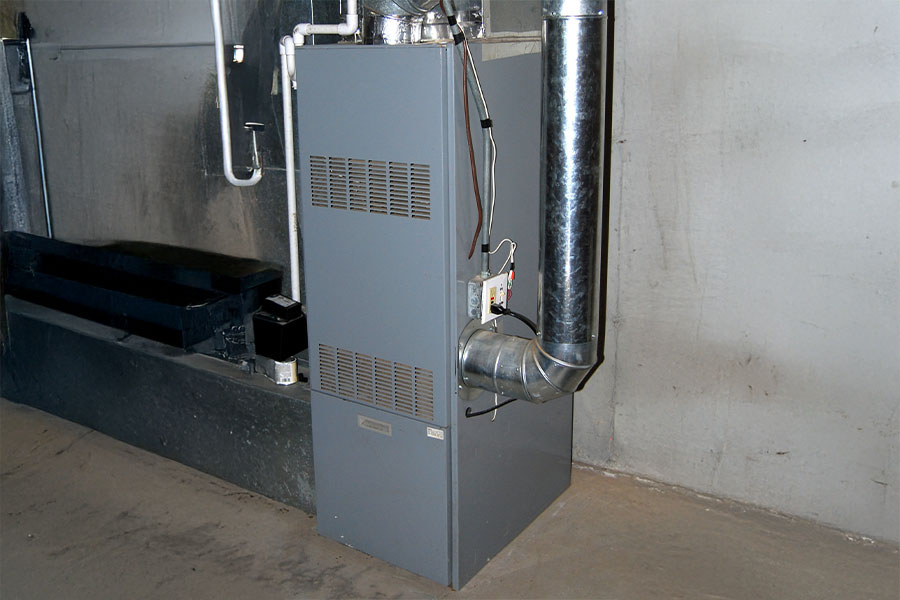
The development timeline of Sugarmill Woods has produced an aging curve that affects different sections of the community on overlapping schedules. The original sections along the community’s core roads are running equipment that in many cases is approaching or has exceeded thirty years of service. The later-developed sections are running early-1990s systems that are now in the window where major components like heat exchangers, compressors, and control boards begin failing with increasing frequency. Understanding where in that curve a specific home sits is part of how we prepare for every Sugarmill Woods call.
The predictability of these failure types in Sugarmill Woods is something our technicians use to their advantage. A call from a specific section of the community provides meaningful diagnostic context before the technician arrives at the door.
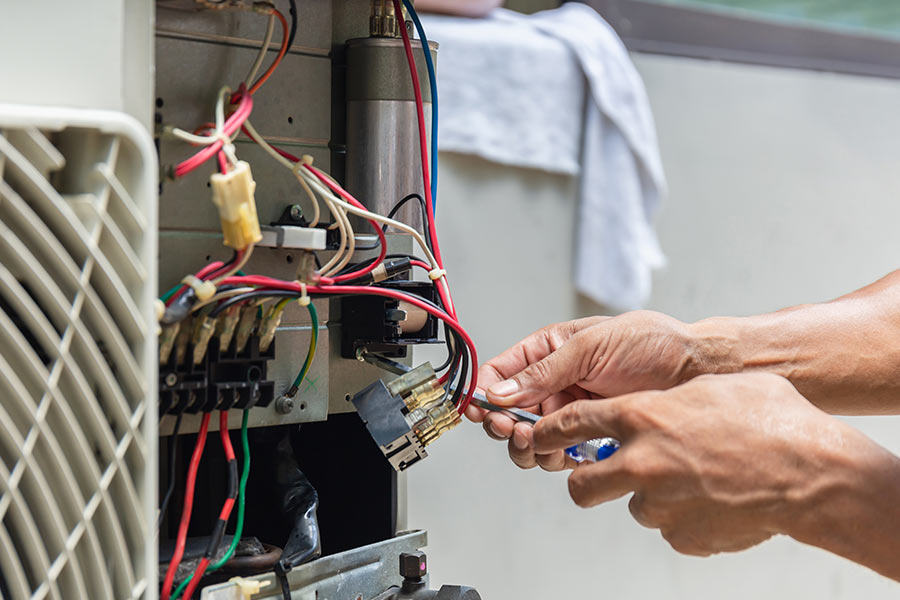
Fast Air Repair brings the diagnostic preparation and parts depth that Sugarmill Woods’s multi-era residential landscape demands. We serve this community as a core part of our Citrus County territory and we know the equipment generations, development sections, and seasonal occupancy patterns that define HVAC service here.
Our repair services for Sugarmill Woods homeowners include:
Same-day service is available for urgent calls and 24-hour emergency coverage is maintained for after-hours breakdowns throughout Citrus County.
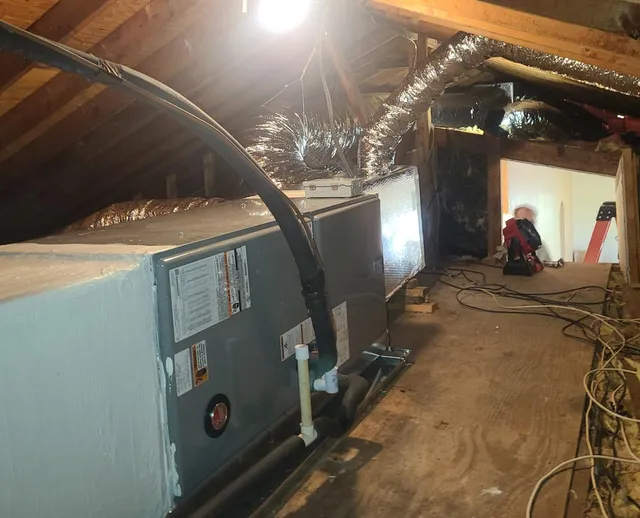
We got a call from a homeowner named Walter who lives in the Oak Village section of Sugarmill Woods. He had returned from spending the summer in the northeast and turned on his heat pump for the first time in October. The system ran for about ten minutes, produced minimal heat, and then switched itself to emergency heat mode where it stayed regardless of what he did with the thermostat.
Our technician found two problems. First, the condensate drain line had developed a partial blockage from algae growth during the summer dormancy period, which had triggered the float switch and interrupted normal heat pump operation. Second, and more significantly, the compressor showed signs of valve wear that had reduced its pressure differential to the point where it could not effectively transfer heat in heating mode. The compressor could still run cooling cycles adequately, which is why Walter had not noticed a problem the previous summer, but the lower pressure demands of heating mode exposed the valve wear clearly.
We cleared the condensate line and treated it against regrowth, then gave Walter an honest assessment of the compressor condition. Given the system’s age and the extent of the valve wear, we recommended replacement over a compressor repair. Walter appreciated the direct conversation and the fact that we explained the reasoning rather than just presenting a number. He scheduled the replacement for the following week and used supplemental heat in the interim. That kind of transparency on a significant repair decision is something we make a standard part of every major diagnostic conversation.
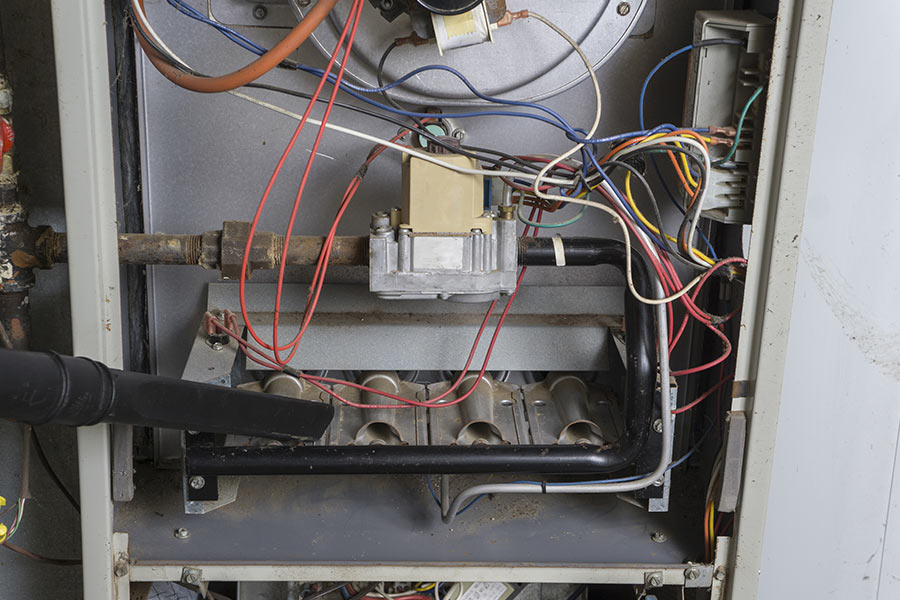
Sugarmill Woods attracts homeowners who have dealt with service companies across multiple decades and multiple properties and who bring a well-calibrated sense of what good service looks like. They notice when a technician actually knows their equipment, when an estimate is padded versus honest, and when a company follows through on what it promises. Fast Air Repair’s reputation in Citrus County rests on consistently passing that kind of scrutiny, service call after service call across a community where the standards are high.
Here is what every Sugarmill Woods service call delivers:
Sugarmill Woods homeowners deserve a company that meets their standards and holds itself accountable to them consistently. That is the commitment we bring to every call in this community.
Sugarmill Woods homeowners often arrive at service conversations well-informed and with specific questions. Here are the ones we hear most often before a furnace or heat pump call in this community.
Both a low refrigerant charge and compressor valve wear reduce heating and cooling capacity, but they present differently on diagnostic equipment. Refrigerant charge can be measured directly and corrected if no leak is present. Compressor valve wear shows up in pressure differential testing as reduced high-side pressure relative to what the system should produce. A technician with the right gauges can distinguish between these causes within the inspection.
The three most common issues we find on seasonal startup inspections are condensate drain blockages from summer algae growth, ignitor degradation from humidity exposure during dormancy, and air handler biological growth on the evaporator coil. A startup inspection before relying on the system through winter catches all three and gives you a documented baseline for the system’s current condition.
The honest answer depends on system type and condition rather than age alone. For gas furnaces approaching or past twenty-five years, the heat exchanger is the critical variable. For heat pumps from the early 1990s, compressor condition drives the replacement conversation. A full condition inspection gives you the information needed to make this decision based on actual component status rather than calendar age.
Repeated safety switch trips almost always point to an underlying condition that is pushing the system past a design limit. The most common causes are airflow restriction from a clogged filter or collapsed duct causing overheating, a condensate backup triggering a float switch, or a gas or combustion issue causing the flame rollout or high-limit switch to trip. Each represents a real problem that should be diagnosed rather than reset and ignored.
We offer financing options and run regular promotional discounts that can make annual maintenance and startup inspections more affordable. Ask about current offers when you call to schedule. For seasonal residents especially, annual service on a consistent schedule is the most cost-effective way to manage aging equipment through multiple years of part-time occupancy in Citrus County’s humidity.