


Williston is the largest city in Levy County, a small but self-sufficient community built on the phosphate and agriculture economy that shaped this part of north-central Florida through the twentieth century. The city sits on relatively elevated terrain for Levy County, which gives it slightly colder winter nights than the coastal communities to its west, and its inland position removes the Gulf’s marginal temperature moderation entirely. When cold fronts push through north-central Florida in January and February, Williston homeowners feel the full force of them, and heating systems that are marginal or poorly maintained have nowhere to hide.
The housing in Williston reflects the city’s history as an agricultural and small-industry center: a downtown core of older commercial and residential structures, a ring of mid-century residential neighborhoods developed during the county’s most active growth period, and a more recent outer band of newer construction on the city’s edges. Each generation of housing brings its own HVAC profile, and the full range of system types and ages is present across Williston’s residential landscape. Fast Air Repair covers Williston and the broader Levy County area and we understand what furnace service in this community requires.
Signs your Williston furnace may need professional attention:
Williston’s inland position and the flat, open terrain of Levy County mean cold air arrives here without geographic attenuation. A furnace that is not fully functional will not be able to compensate for that exposure when temperatures drop into the low 30s overnight.

Williston developed at a different pace and for different reasons than the retirement-driven communities to its south and east, and the HVAC systems in its homes reflect that distinct history. Agricultural and small-business homeowners here have generally maintained their properties practically rather than on scheduled service intervals, which means the systems our technicians find in Williston span a wide range of maintenance states alongside a wide range of ages. Knowing both factors is essential to working effectively in this community.
Williston’s practical homeowner culture means we often find systems that have been kept running through creative maintenance rather than professional service. Our job is to bring those systems into proper operating condition and give the owner an honest assessment of how long they can be relied on going forward.
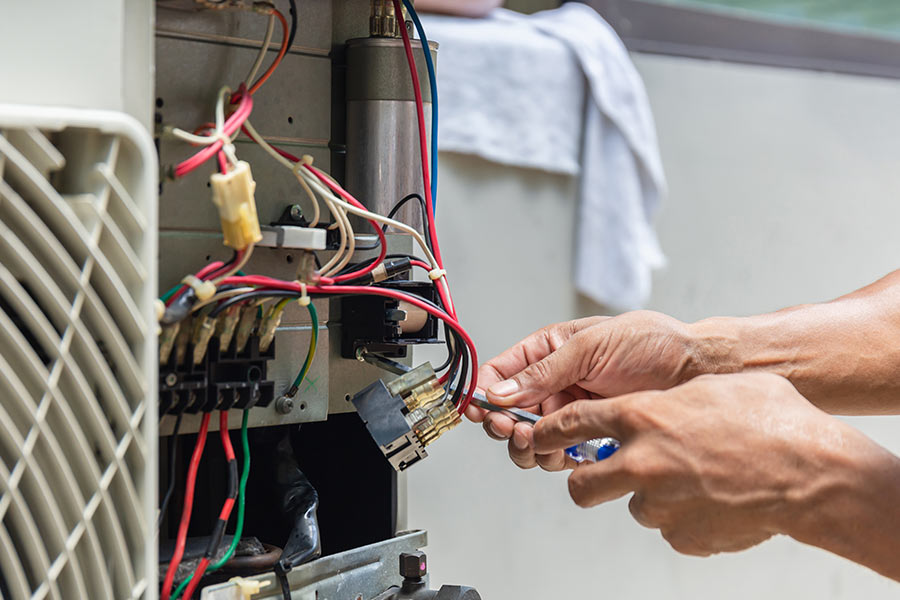
Fast Air Repair approaches every Williston furnace call with respect for the practical homeowner culture that defines this community. We do not push unnecessary repairs and we do not recommend replacement when repair is genuinely the right answer. What we do bring to every call is accurate diagnosis, honest communication, and repairs that actually hold up through the Levy County winters ahead.
Our furnace repair services in Williston include:
Same-day service is available for urgent calls and 24-hour emergency coverage is maintained for after-hours breakdowns throughout Levy County.
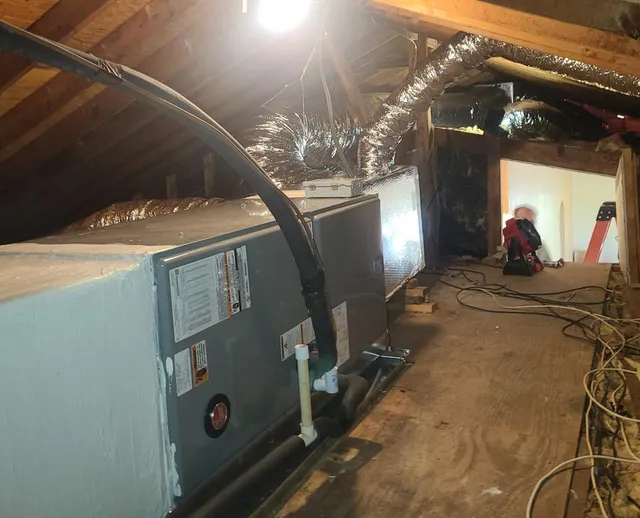
We got a call from a homeowner named Fred who lives in one of the residential neighborhoods near Williston’s downtown core. He had been noticing that his gas furnace blower ran for an unusually long time after the burner shut off at the end of each heating cycle, sometimes for eight or ten minutes after the flame went out. The house was heating normally otherwise and he had been watching it for a few weeks before deciding to call.
Fred’s instinct to pay attention to that detail rather than dismiss it was the right one. Our technician found a heat exchanger with a small crack at a weld point that was allowing combustion gases to enter the supply air plenum during the burner-on phase of each cycle. The extended blower run time Fred had noticed was actually the control board’s high-limit safety responding to elevated temperatures in the plenum section near the exchanger crack, keeping the blower running to cool the area down before allowing the next cycle to begin. The symptom he had described was the system’s own safety logic telling him something was wrong.
We replaced the heat exchanger, ran a full combustion analysis and carbon monoxide test after the repair, and verified the high-limit switch was resetting to normal operation before leaving. Fred mentioned he had almost not called because the house seemed to be heating fine. The house was heating fine, but the combustion safety was not. That distinction is exactly why the blower run time anomaly was worth acting on rather than watching another week.

Williston homeowners are not looking for a company that sells them something they do not need. They are looking for a company that shows up, tells them what is actually wrong, fixes it for a fair price, and backs the work. That is an accurate description of how Fast Air Repair operates, and it is the reason our reputation in Levy County holds up in a community where straight talk is the baseline expectation for any service relationship.
Here is what every Williston service call delivers:
Williston is a community where a handshake still means something. Fast Air Repair operates the same way, and that alignment with how this community does business is part of why homeowners here keep calling us back.

Williston homeowners ask practical, direct questions before booking furnace service. Here are the ones we hear most often from this community.
Extended blower run time after the burner cycle ends is sometimes normal as the system cools the heat exchanger down before shutdown. If the run time is unusually long, eight minutes or more after flame-out, it usually means the high-limit safety switch is detecting elevated temperatures in the plenum area and keeping the blower on to bring them down. This pattern is a diagnostic signal worth investigating, not ignoring, because it can indicate a heat exchanger issue.
Coastal communities receive marginal temperature moderation from the Gulf’s thermal mass, which keeps overnight lows a few degrees warmer than inland communities at the same latitude. Williston does not receive that buffering. Cold fronts arrive here at their full intensity, and heating systems carry a higher per-cycle load during the season’s coldest events than equivalent systems in Gulf-adjacent towns. Systems that are marginally functional show this difference clearly when temperatures drop below 35 degrees overnight.
Not reliably. Small cracks at weld points and fold radii in a heat exchanger are not visible without inspection equipment, and even combustion gas leakage from a cracked exchanger is often below the threshold of smell at the levels that still represent a meaningful carbon monoxide accumulation risk over time. A carbon monoxide detector near the furnace provides a safety baseline, but it is not a substitute for a proper heat exchanger inspection on an older gas furnace.
In most cases, yes. If the addition was built without properly extending the duct system from the main house, the fix is a duct extension and balancing adjustment rather than a furnace replacement. The existing furnace may have adequate capacity to serve the addition once the distribution system is corrected. A load calculation and duct assessment will tell you whether the furnace is sized appropriately for the total square footage or whether capacity is also a factor.
Yes. We maintain supplier relationships for older and less common HVAC system parts that go beyond standard service truck inventory. Older homes in communities like Williston often have systems that require specific sourcing, and we make that effort rather than declaring the system unserviceable and pushing a replacement. We will tell you honestly if a part is genuinely unavailable, but that is much rarer than most homeowners expect.